
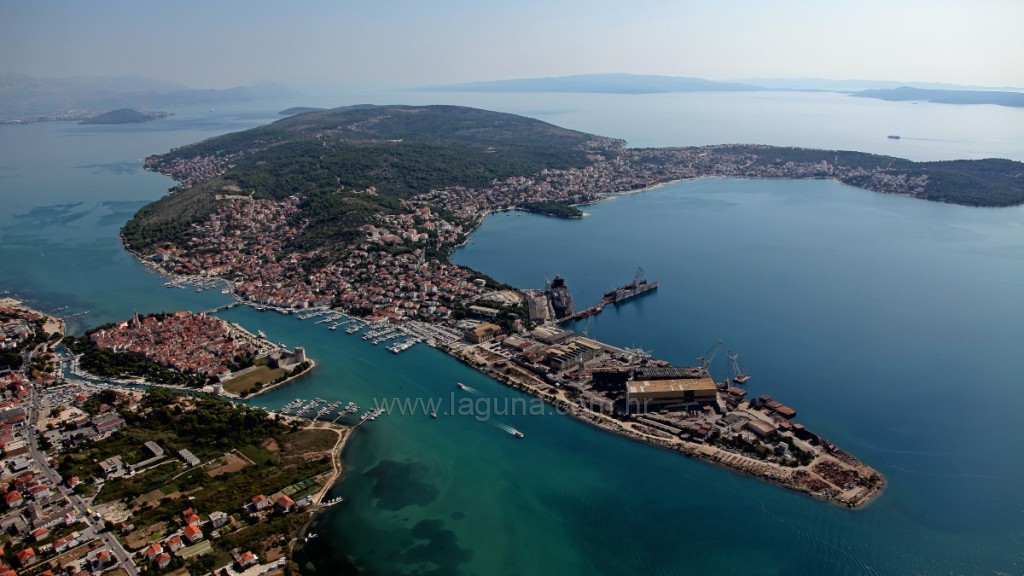
The town was settled in the 3rd century.The Greek colony Tragurion was established by seamen, who came from the islands Vis.Trogir was famous in the Roman Empire because of its excellent marble. A few reliefs from the antique history of Trogir are preserved like the one of Kairos (4th-3rd century B.C.) and a work, which represents a woman on a loom (2nd-1st century B.C.).
The early Romanic church of St. Barbara from the llth century is especially worth to mention.
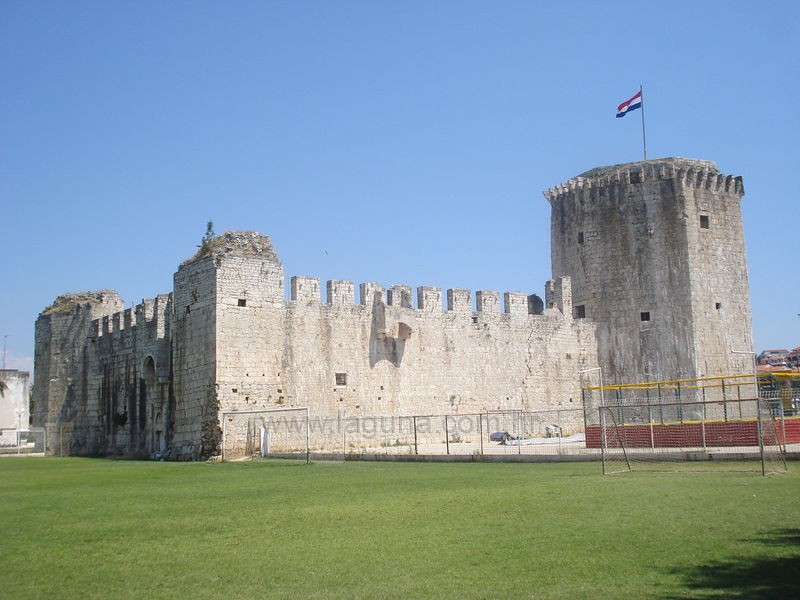
The period from the 13th to 15th century represents the top of the social, economic, cultural and artistic power of Trogir. This was the time of big buildings, the improvement of the fortification system with walls and fortresses, which surrounded the town completely.Local craftsmen and artists have enriched the city, leaving many works, Radovan, Blaz Jurjev Trogiranin, John Duknovic and also Andrija Alesi and Nicholas of Florence.
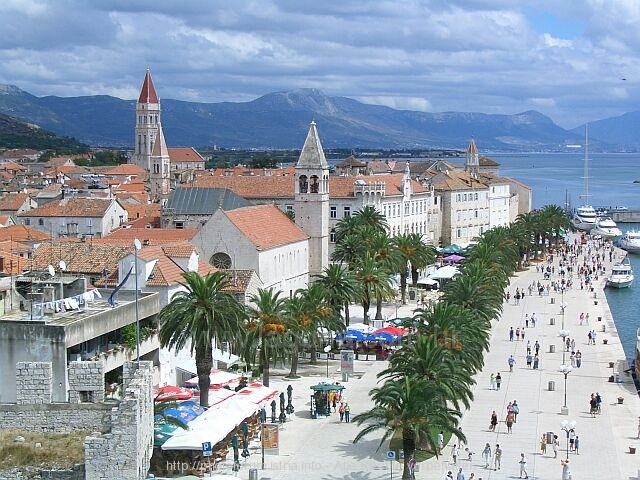
St. Lawrence Cathedral with famous Radovan’s portal is a church where the styles ranging from Romanesque to Mannerism, and left their traces behind numerous artists, whose art collection kept most valuable cultural and artistic heritage of the city.